Understanding Exploitative Poker Strategy
Exploitative poker is about identifying opponents’ weaknesses and developing strategies that take advantage of them.
The starting point is not simply deciding which hands to play. It is understanding the opponents we are playing against, the mistakes they make and how different betting actions can exploit those mistakes.
A strategy that works against one type of opponent may be ineffective against another.
For example, a strategy designed to exploit loose-passive players may work extremely well at a table full of weak players. However, the same strategy can become vulnerable when used against aggressive opponents who understand how to attack it.
The objective is to recognise these differences and adjust our play accordingly.
Understanding Your Opponents
One of the central ideas in my approach to exploitative poker is distinguishing between different types of players.
At lower stakes, players who appear similar from their pre-flop statistics can behave very differently after the flop.
NITs
NITs are extremely tight players who generally prefer to enter pots with strong starting hands.
They tend to be cautious and are often reluctant to continue when they have missed the flop.
Their predictability can create opportunities for aggression, particularly when they are unwilling to defend their ranges.
However, when these players show substantial strength, their actions should be taken seriously.
TAGs and TAGfish
TAG stands for tight-aggressive.
A genuinely skilled TAG understands how to apply aggression, bluff and adjust to different opponents.
However, some players have pre-flop statistics resembling those of a TAG without possessing the same understanding of exploitative poker.
In my writing, I refer to these players as TAGfish.
TAGfish often use strategies such as continuation betting, stealing the blinds and occasionally 3-betting. However, they tend to use these tactics mechanically.
They may continuation bet frequently on the flop but become extremely cautious on later streets.
Their aggression often disappears when the pot becomes large.
This creates two important opportunities.
Firstly, they can be vulnerable to bluffs because they are reluctant to continue without strong hands.
Secondly, when they suddenly show substantial aggression in a large pot, their actions may reveal considerable hand strength.
The important distinction is that a TAGfish may look like a TAG before the flop but behave much more like a NIT when facing difficult post-flop decisions.
Exploiting Pocket-Pair Weaknesses
One of the most important weaknesses discussed in my ebook is the tendency of certain low-stakes regulars to play too many pocket pairs.
These players often attempt to see a flop cheaply with small and medium pocket pairs, hoping to hit a set.
The problem is that hitting a set is relatively uncommon.
A player who relies heavily on set-mining needs to win enough money when a set is completed to compensate for the occasions when the hand misses.
This becomes particularly difficult against opponents who do not pay off large bets with weaker hands.
The problem is made worse when the player is out of position and does not have the betting lead.
Some regulars also reveal information about their hands through their pre-flop bet sizing.
For example, a player who consistently raises small with low pocket pairs but uses larger raises with premium hands may make their range easier to identify.
Such patterns can create opportunities for 3-betting and continuation betting.
However, the important consideration is whether the opponent actually demonstrates these tendencies.
Pre-Flop Strategy
When developing a pre-flop strategy, I prefer to begin by considering what we are attempting to achieve rather than immediately choosing a starting-hand range.
Against predictable regulars, aggression can be particularly effective.
Raising Limpers
Some tight players occasionally limp with small or medium pocket pairs.
When we have position against these opponents, raising to isolate them may create an opportunity to win the pot with a continuation bet.
However, we must first establish that the opponent genuinely limps with weaker hands.
Some players limp with premium hands intending to re-raise.
Attempting to isolate such an opponent without understanding their tendencies can be expensive.
Stealing the Blinds
Against tight regulars, stealing the blinds can be profitable because they may defend with relatively narrow ranges.
Some will call with pocket pairs and broadway hands but fold many of those hands when facing a continuation bet.
However, their 3-betting ranges can vary considerably.
A particularly tight player may only 3-bet with premium hands, while a more aggressive opponent may defend much more frequently.
These differences must influence our decisions.
The Importance of 3-Betting
One of the principal strategies discussed in my ebook is using 3-betting against predictable regulars.
There are several reasons for doing this.
Winning the Pot Before the Flop
A 3-bet can force an opponent to fold immediately.
Against players who raise with hands they are unwilling to defend, this can be an important source of profit.
Taking the Betting Lead
Another important reason for 3-betting is to gain the betting lead.
Many regulars automatically continuation bet when they are the pre-flop raiser.
If we simply call, we may face a continuation bet regardless of whether the opponent has connected with the flop.
By 3-betting, we can often take the initiative and put the opponent to a decision.
This can be particularly useful against players who dislike playing large pots without strong hands.
Creating Post-Flop Opportunities
When an opponent calls a 3-bet with a predictable range, a continuation bet may be profitable if they frequently fold hands that have missed the flop.
For example, a regular holding small or medium pocket pairs may struggle to continue when the flop contains higher cards.
Similarly, AK or AQ may be difficult for them to play when neither hand has connected with the board.
The objective is to exploit these tendencies rather than simply 3-bet for the sake of aggression.
Choosing Hands for 3-Betting
In my ebook, I discuss using hands that retain some potential to make strong holdings when a bluff is called.
These include suited connectors, one-gappers, certain small suited aces and selected pocket pairs.
The reasoning is that there are several ways to win the pot.
We may win immediately when our opponent folds to the 3-bet.
We may win with a continuation bet after the flop.
Alternatively, we may complete a strong hand, such as a straight, flush or higher set, against an opponent holding a powerful but inferior hand.
However, this does not mean we should 3-bet every suitable hand on every occasion.
We must consider our opponent’s tendencies, our position and the players still waiting to act.
An observant opponent may recognise excessive 3-betting and respond by 4-betting more frequently.
The strategy must therefore be adjusted to the circumstances.
Post-Flop Strategy Against Regulars
Many of the low-stakes regulars described in my ebook are uncomfortable committing substantial money without a very strong hand.
This creates opportunities for bluffing, but it also provides important information when those opponents become aggressive.
When an Opponent Checks
If we have 3-bet pre-flop and our opponent checks on the flop, a continuation bet may be profitable.
This is particularly true against opponents who call pre-flop with pocket pairs and frequently fold when the flop contains higher cards.
However, we must consider whether checking behind may be more profitable with certain drawing hands.
The objective is to select a betting line that performs well against the opponent’s likely range.
When an Opponent Shows Strength
Against very cautious regulars, substantial aggression in a large pot may indicate a strong hand.
This is particularly important when the opponent’s starting-hand range contains many pocket pairs.
If a player rarely commits significant money without a set or another powerful holding, we should not automatically assume that our own strong-looking hand is good enough.
One of the important lessons from my ebook is learning to fold when an opponent’s actions and likely range indicate that we are beaten.
Using Betting Actions to Narrow Ranges
An opponent’s actions can help us determine which hands remain likely.
For example, a player who routinely continuation bets on the flop may provide little information with that initial bet.
However, their response to a raise, their willingness to continue on the turn and their behaviour when the pot grows may reveal considerably more.
Understanding these patterns allows us to make better decisions on later streets.
Developing Betting Lines Away from the Table
Much of the work involved in exploitative poker should be completed away from the table.
We can examine how different betting actions perform against an opponent’s likely range.
We can consider which hands will fold, which will call and which will raise.
We can also estimate how much money we expect to win from weaker hands and how much we risk losing against stronger holdings.
The objective is to develop planned betting lines for situations that occur repeatedly.
Once these situations become familiar, we can apply the appropriate strategies without having to work through every calculation while playing.
Final Thoughts
The central principle of exploitative poker is to understand the opponents we are playing against.
Some opponents are too cautious. Others use aggressive strategies mechanically. Some reveal information through their bet sizing, while others become predictable when the pot grows.
These weaknesses create opportunities, but only when we recognise them and choose the appropriate response.
Exploitative poker is about developing strategies that take advantage of the mistakes our opponents actually make, rather than applying the same strategy against everyone.
Further Reading
My free ebook, Exploiting Regulars at 10–25NL, examines these ideas in greater detail, including the weaknesses of predictable regulars, pocket-pair strategies, pre-flop 3-betting and post-flop decisions.
The complete ebook will be available on the Books page.
Latest Articles
- Hand 18. How to Play Top Pair Top Kicker – Hero IP/Without the Lead

- Hand 17. How to Play Top Pair Top Kicker – Hero IP/With Lead/Dry Board
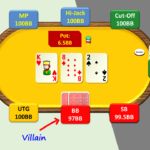
- Hand 16. Pocket Pair below Top Pair – Hero OOP/Wet Board vs Loose-Passive Player

- Hand 15. Pocket Pair below Top Pair – Hero IP/Without the Lead/Wet Board – Loose-Passive Villain Checks
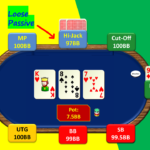
- Hand 14. Pocket Pair below Top Pair – Hero IP/Without the Lead/Wet Board – Loose-Passive Villain c-Bets
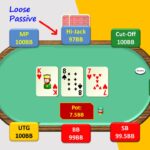
- Hand 13. Pocket Pair below Top Pair – Hero IP/With the Lead/Wet Board – Loose-Passive Villain Donk Bets